


Why most organizations misunderstand what sovereign communications actually means
Your data may never leave your country, but your communications platform probably still does.
Most organizations start by asking: “where is our data stored?” That’s the wrong question. Sovereignty in communications is determined by every layer behind the service, not just where data sits. This whitepaper shows you what a complete assessment actually looks like.
Modern communications platforms depend on multiple layers of infrastructure, identity, management, operations and governance. An organization can host its conferencing infrastructure entirely on-premises, and maintain complete data residency, while still depending on external providers to authenticate users or keep their service operational.
Full sovereignty means understanding who controls every layer.
Trusted by defense organizations, government agencies, and regulated enterprises across Europe and the United States.
You’re only as sovereign as your least sovereign dependency
Sovereignty is more than a singular technology decision or a compliance checkbox.
It is the combined result of the infrastructure your communications run on, the way your data is protected, the systems authenticating your users, the tools administering your environment and more.
The VQ Sovereignty Stack examines six layers of control:
Infrastructure – Where workloads run
Physical location matters, as does who owns, manages and ultimately has authority over the environment.
Data – What is stored, where, and who controls the keys
Data residency does not necessarily equal data sovereignty. Encryption, key ownership, processing and retention all affect who ultimately controls information.
Identity – Who is authenticated, and by whom
Even a locally hosted platform can remain dependent on an externally controlled identity provider.
Management – Who controls the control plane
Can your administrators configure, update and manage your communications environment without connecting to vendor-controlled infrastructure?
Operations – What happens when something goes wrong
Sovereign communications must remain available during the scenarios in which organizations need them most, including cloud outages, cyber incidents and geopolitical disruption.
Governance – Who controls the future of the system
Licensing changes, product discontinuation, acquisitions and vendor decisions can all become sovereign dependencies if your organization lacks an effective exit strategy.
What You’ll Learn
Our latest white paper explores the realities of modern video conferencing security – and how to regain control without adding complexity.
The Hidden Layers of Sovereignty explores:
- Why data residency is not sufficient to establish communications sovereignty
- The difference between the media plane and control plane
- How foreign jurisdiction can create dependencies even when infrastructure is locally hosted
- The six layers of the VQ Sovereignty Stack
- How cloud dependency can affect communications during a crisis
- The relationship between sovereignty and operational resilience
- A four-tier model for assessing your current sovereign posture
- Six questions security and IT teams can use to uncover hidden dependencies
- Five architectural principles for building more sovereign communications environments
Built for security leaders responsible for more than compliance
The Hidden Layers of Sovereignty is designed for CISOs, security leaders, IT architects, infrastructure teams and procurement professionals assessing communications environments across government, defense, intelligence, emergency services and highly regulated enterprise.
It provides a practical framework for challenging assumptions, identifying dependencies, and asking more useful questions of both existing and prospective communications platforms.
Explore the sovereignty challenge
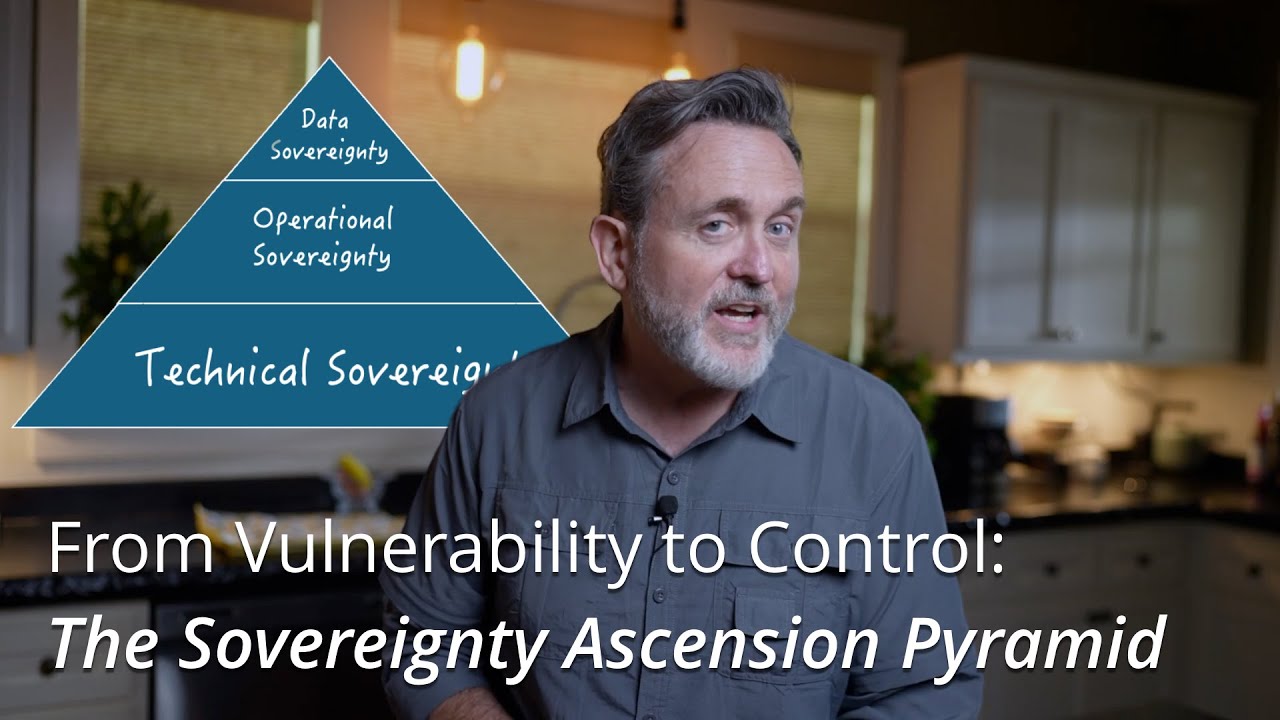
Sovereignty is about more than where your data is stored. Watch VQ Communications explore what true control over communications infrastructure means and where hidden dependencies can leave organizations exposed.
Want to understand where your organization sits on the Sovereignty Stack?
The whitepaper gives you the framework. If you want to apply it to your own environment – your infrastructure, dependencies, and risk profile – our team works with organizations across government, defense, and regulated enterprise to do exactly that.
